Rent an Historic Nantucket Home

A BRIEF HISTORY

In 1717, the Proprietors of the Common and Undivided Lands of Nantucket laid out the twenty- seven Fish Lots south of Main Street, between the Orange Street bluff and Pine Street. The second major allotment of land near lies the Great Harbor—following the Wesco Acre Lots of 1678.

The Fish Lots were so named because of their original use as sites for drying fish, and were typical of early maritime communities. They quickly filled with dwellings, shops, barns, and even an oil manufactory, but many of the very early buildings are no longer in evidence. The dwelling built in 1746, is one of the oldest houses remaining in this section of town.

FIRST FAMILY

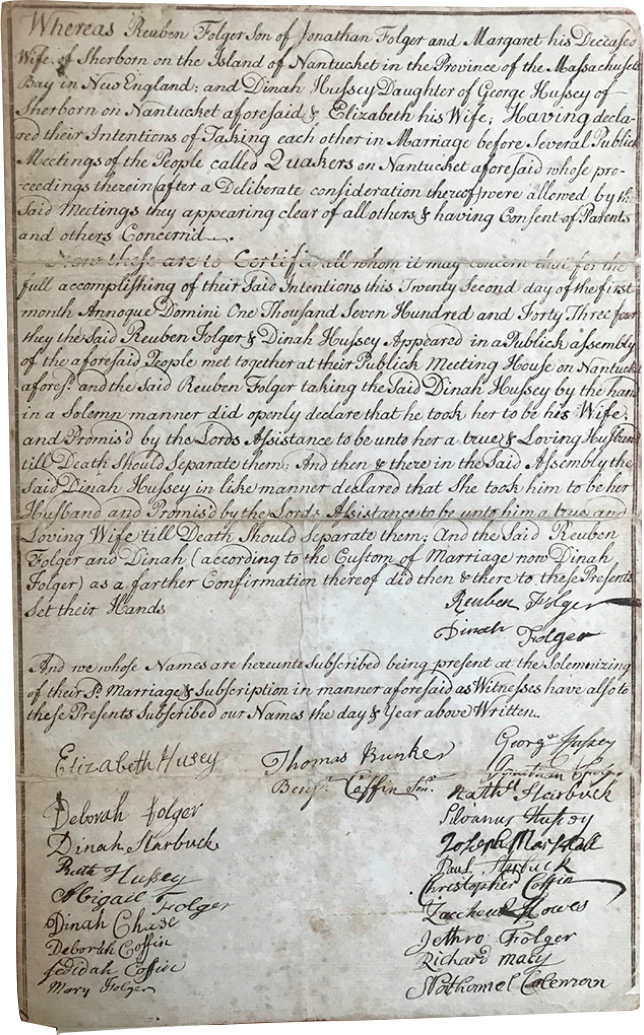
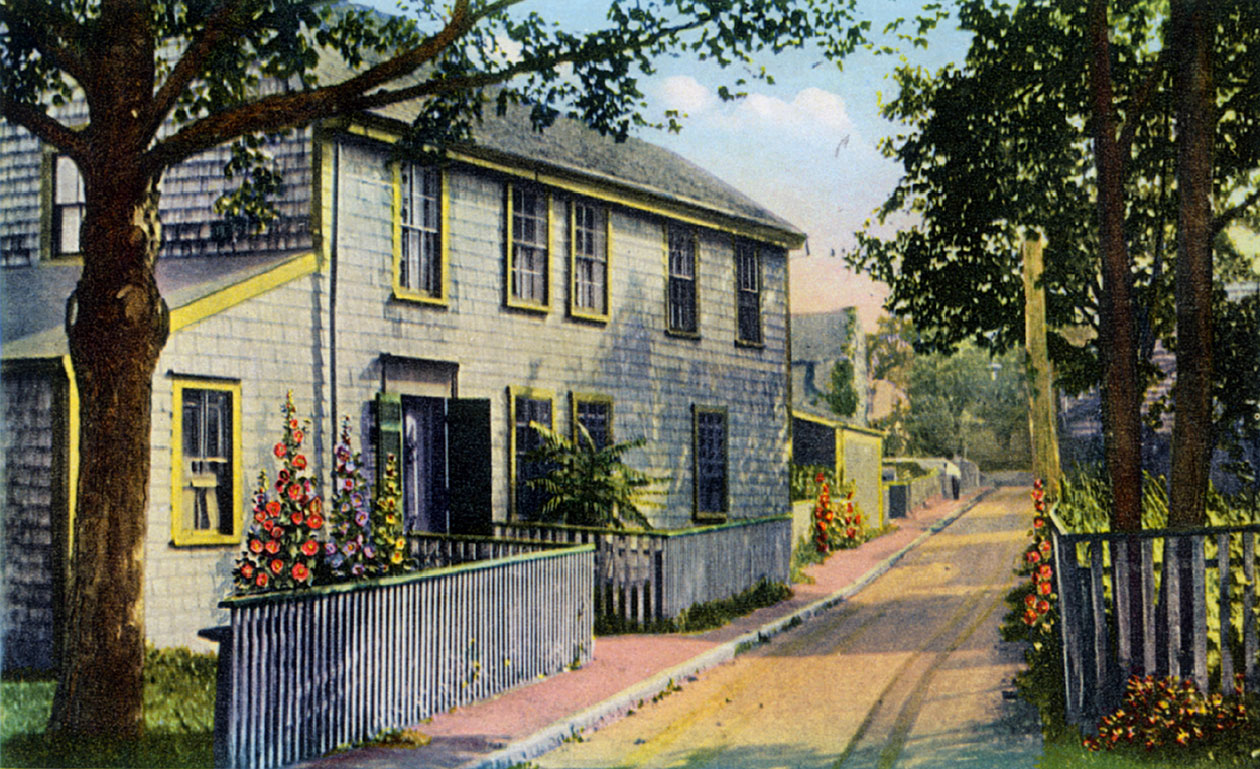
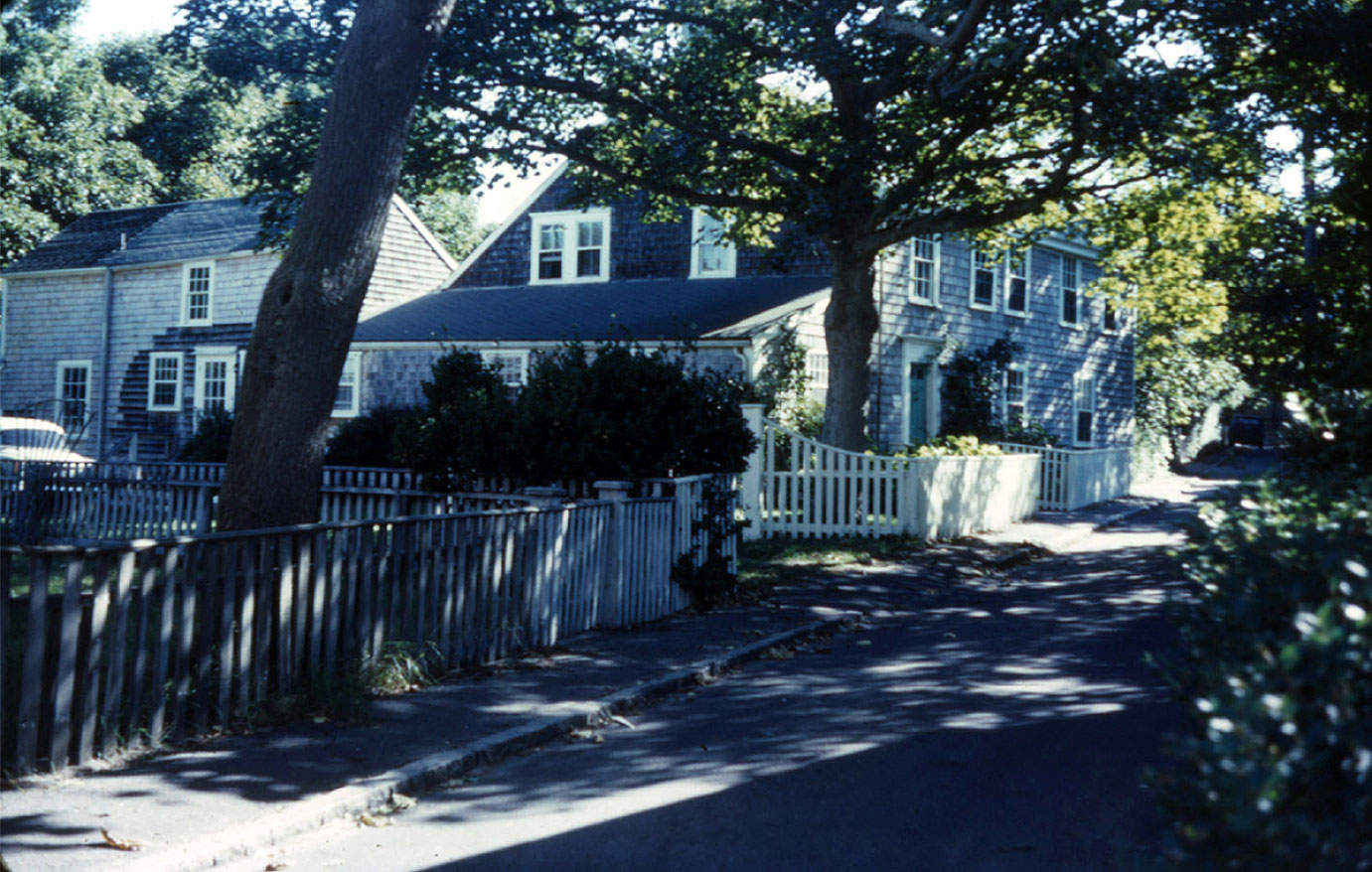
The home dates back to 1746, when George Hussey built it for his daughter, Dinah (1727–63), and son-in-law Reuben Folger (1722–1808) on land he had inherited in 1718 from his father, Stephen, in the twenty-fifth Fish Lot. He deeded to the young couple the land under their house extending ten feet from the foundation on the east, north, and west sides. On the south side, he stipulated a highway, one rod [16.5 feet] wide, a lane known variously as Moose Lane, Mooers Lane, Moores Lane.

The original structure, according to a Preservation Institute: Nantucket survey conducted in 1985, was a two-story house, two rooms deep, with a three-bay façade. Both chimney and door were on the west side of the house, allowing for a future addition that would take advantage of the situation of the chimney.

Reuben Folger was a blacksmith, a trade that was linked to the whaling industry. He and Dinah had six children before she died in 1763. In 1795, Reuben transferred the house to daughter Rebecca Folger Chase (1758–1833) and her husband Joseph Chase (1752– 1833), retaining a life right for himself. Joseph was a mariner and merchant; he and Rebecca had eight children. They sold the house to son George H. Chase in 1831.

The house had expanded by this time, although it is difficult to determine the extent of the expansion from the footprint of the building on William Coffin’s 1834 Map of the Town of Nantucket. What is apparent on that map is the huge conglomeration of buildings on the east side of the house, where Zenas Coffin had a candle house, cooperage, and other buildings essential to a large oil-manufacturing establishment. East of the Coffin oil works was a Quaker Meeting House (removed in 1863) facing Fair Street.

When George H. Chase (1792–1857) purchased the family home for $100 in 1831, he and wife Rebecca Coffin (1799–1832) had two young sons, ages one and ten. Rebecca died a year later. George was the third husband of his second wife Judith Macy (1801–72), who lent her name to the lane in the late nineteenth century. After their stepmother died in 1872, Joseph and Rowland, who were living in Boston and California respectively, sold the house, at auction, to Nathaniel Fitzgerald for $185. Five days later he sold the property to Lydia Small for $350.

SECOND FAMILY

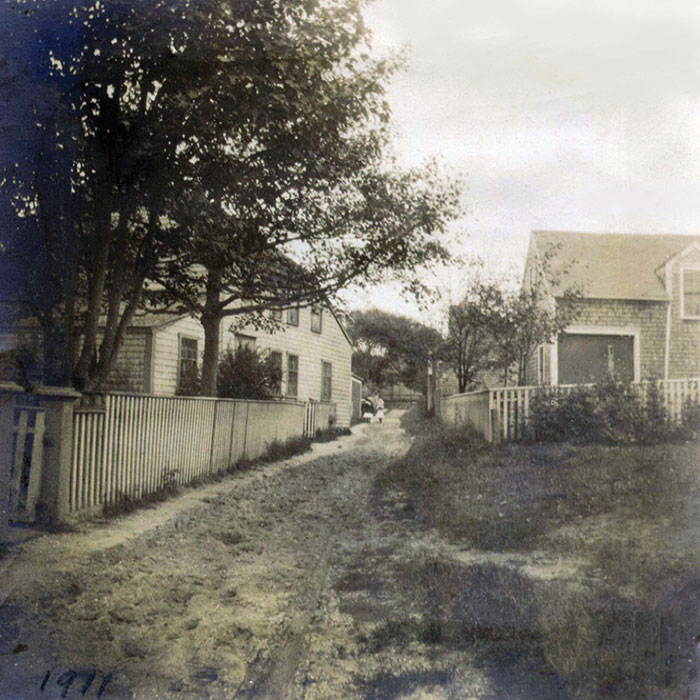
Lydia Small (1837–1927) purchased the home in 1872, initiating the second long-term family ownership of the house that had been occupied by descendants of George Hussey since 1746. She and her husband, Asa (1840–94), were from the Cape, where Asa had been a captain in the East India trade. He and Lydia’s brother, Charles Kenney, are best known as the proprietors of the Wauwinet House, an inn they built at the top of Polpis Harbor in 1876. Asa and Lydia had twins, Linda and Reuben, who were four years old when the family moved into the home.

Linda Small Backus (1868–1942) and her husband, James A. Backus (1865–1936), took over running the Wauwinet House in 1897. Known as “Mother Backus,” Linda spent most of her married life in Wauwinet, where “The delightful hospitality which always manifested itself at Wauwinet radiated her own personality. She was always the genial hostess, with a cheery welcome for all.” (Inquirer and Mirror 9/19/1942). The family house in town was frequently rented to vacationers during this period. Linda’s daughter, Helen Backus, was born in the home. She married John F. Shaw Jr. in 1929, and they made her birthplace their home until they sold the property in 1951.

A number of additions had been made to the original house by 1887, when the first Sanborn Insurance Company survey was made. A photograph taken from the First Baptist church tower in the 1880s clearly shows the structure with additions on the north, east, and west sides.

THIRD FAMILY

Grace P. “Billy” Hilliard (1916–2009) lived in Annapolis, Maryland, but was familiar with Nantucket, where her grandfather, Robert Hilliard, was a key member of the ’Sconset Actors Colony in the early twentieth century. Her father, Robert B. Hilliard, was a commander in the Navy and she followed in his military footsteps, serving as an instructor in celestial navigation for the Women Airforce Service Pilots (WASP) during World War II. The two-hundred-year-old house needed lots of work, and Grace gave it her full attention, refinishing floors and paneling and uncovering original fireplaces. She invited the Preservation Institute: Nantucket to conduct an extensive survey of the structure in 1985

Grace was close to her sister, Elizabeth Hilliard Schmidt, who married second husband William Berry at St. Paul’s Episcopal Church on Fair Street in 1952. Elizabeth’s daughter, Elizabeth “Betsy” Anne Schmidt, spent summers with her aunt before her marriage to John Harry Morrison, Jr. in 1954; afterwards, the couple spent part of every summer at the family home on Judith Chase Lane. Grace transferred ownership of the property to her niece in 1989, and in 2007, Elizabeth S. Morrison transferred the dwelling to her three children. They sold the 270-year-old dwelling to current owners Peter and Elizabeth Georgantas in 2015.

All contents property of ACK LAST ©2018-